

Reset
I’m rebuilding this newsletter into a weekly playbook for shipping sticky consumer apps (and the trust layer underneath).
2026 is my build-in-public year, and I’m writing everything I learn.
This newsletter is for consumer-builders: people who want to understand why certain apps feel addictive, comforting, or impossible to quit, and how to recreate that ethically.
Each week you’ll get:
(1) one teardown (onboarding + retention loops),
(2) one stealable lesson, something you can use today, and
(3) one update on what I’m building, what I'm shipping, what broke, what I learned
Plus: Trust Layer drops on TEEs, confidential compute, and how “trust” actually works under the hood.
If that’s not your lane, unsubscribe, no hard feelings 💗
If it is, welcome back. We’re keeping this practical.
The moment it clicked
A few months ago, I was burned out from hacker houses and “always-on” ambition.
One Sunday in SF, I tried to touch grass at the Mill.
Two strangers invited me to color with them.
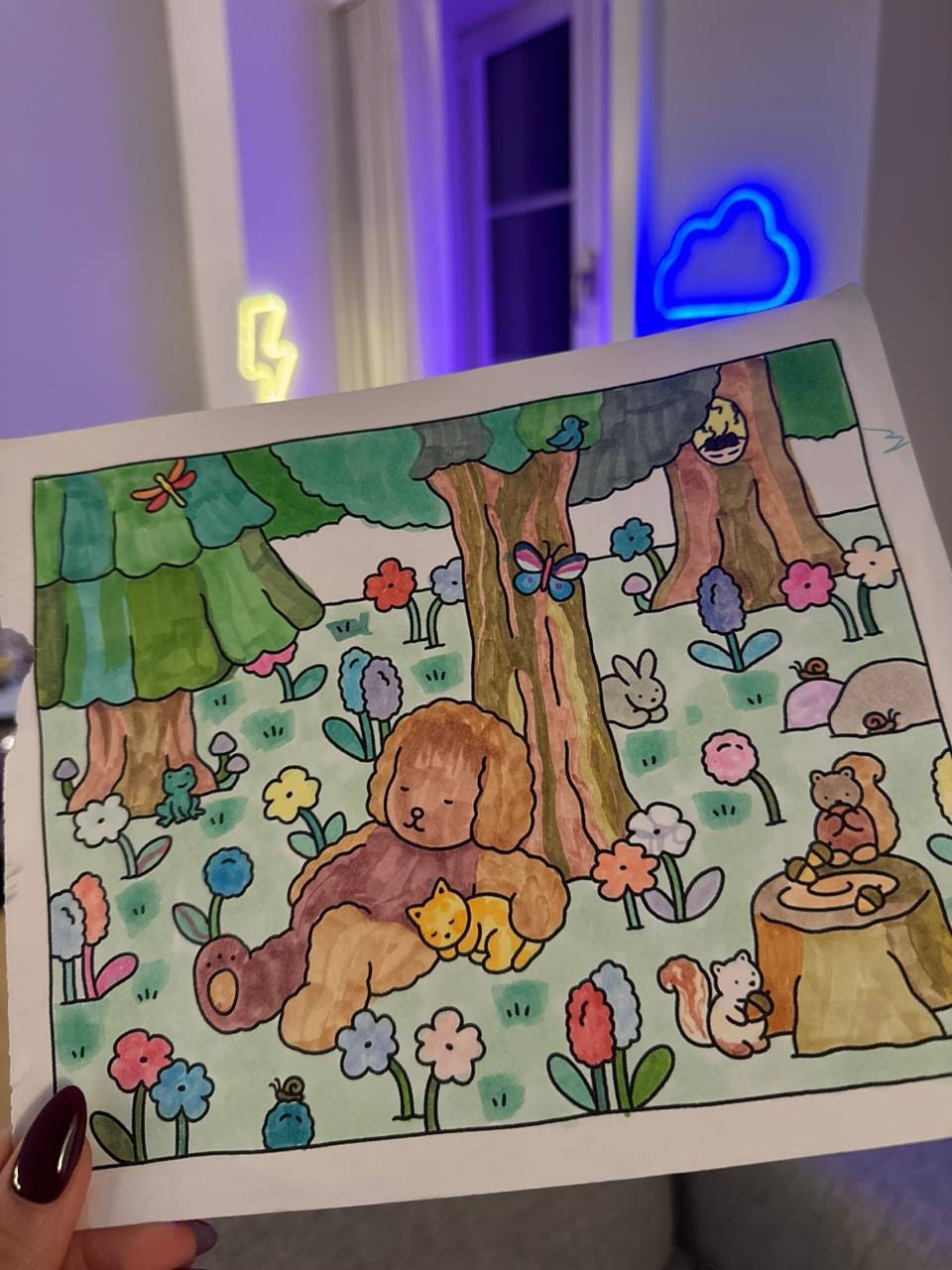
I picked a forest scene: a bear resting, a cat curled under his arm, squirrels eating in a garden, flowers everywhere.
While I colored, I overheard them talking about the same thing I felt: loneliness — in a world full of “how to be better” content.
That’s when it clicked:
People aren’t addicted to content. They’re addicted to a future-self feeling… with no bridge to get there.
Here’s the color-filled page I did that day:
The TikTok trend I’m targeting:
It’s “why does my FYP know me better than I know myself?”
People joke about the algorithm being scary accurate. I’m turning this into a feature, not a bug.
The watch-to-completion data is the ✨honest signal✨. I use that signal in a restful, playful area of the app I’m building.
Creating a bridge between unconscious interest and conscious action.
What the sticky apps know
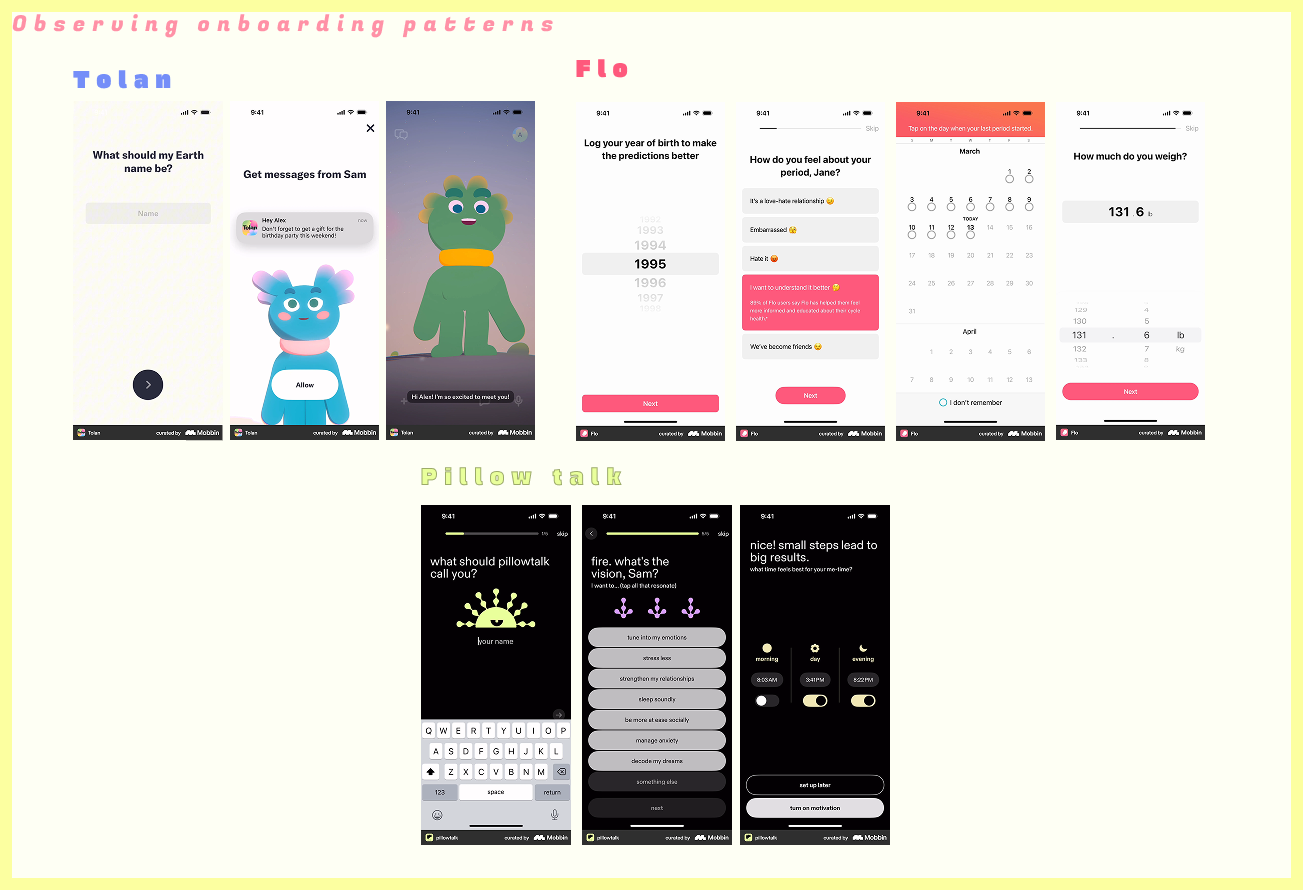
I studied the top-grossing/high-retention apps: Finch, Yazio, Flo, Life Reset, and Dog Translator.
The pattern surprised me.
None of them leads with discipline. They lead with belonging.
→ Finch makes you name the egg before it asks you to improve.
→ Flo frames onboarding as identity, not tracking.
→ Life Reset gives you a world to explore before a single habit is set.
In every case, you pick something, name something, see a world.
Then they ask you to change.
Here’s the proof:
What I’ve built so far
I’ve mapped a full onboarding arc (21 screens) with zero design background.
Designing from the emotional journey pov, with an invitation to enter a world, not an app, a companion before features, a restful and playful area, a quiz on reality check, connecting with TikTok to delegate your account, and one first action: set an intention which results in an immediate bloom in the playful area.
My core bet:
Retention isn’t discipline. It’s curiosity.
If onboarding doesn’t create “I want to see what happens next,” features won’t save you.
What I’m measuring in user tests:
They complete the first action without hesitation
They attribute change to themselves (“I did this”)
They express curiosity to return
They don’t call it tracking/journaling
If 3/5 users hit all four signals, I ship. If not, I rewrite the onboarding prompt, not additional features.
The invitation
If you’re into:
→ Consumer apps + onboarding psychology
→ Building beautiful products with real mechanics
→ Trust infrastructure that actually works
You’ll like this newsletter 💗
— Albi, btw here’s a TikTok I posted today